FAQs on Joining the Ramakrishna Order
The Ramakrishna Order is a well‑defined body of monks which owes its origin to Sri Ramakrishna and his eminent disciples, foremost among whom was Swami Vivekananda. Sri Sarada Devi—revered as the Holy Mother—guided the Order with motherly love and spiritual ministration for over three decades since its inception.
For all practical purposes, “Ramakrishna Order” refers to two registered organizations—Ramakrishna Math and Ramakrishna Mission—with their common Headquarters at Belur Math and more than 200 branches worldwide. Learn more at the official website of Belurmath.
- Applicants must be men (women see Q4).
- Unmarried.
- Graduates, aged 18–28.
- Upper age limit is 30 for engineering/medical graduates and postgraduates, and 36 for Westerners.
For more details, please write to Headquarters (Belur Math): mail@rkmm.org.
Ramakrishna Order is a monastic organization for men only. For women there is a parallel organization known as Sri Sarada Math which follows the same ideals as ours. Interested women may directly contact the Sarada Math at its headquarters in Dakshineshwar, Kolkata. Email address: saradamath.office@gmail.com
- Embracing monastic life is a very significant decision, and it needs a certain maturity of mind to arrive at this decision. Formal education, apart from everything else, usually helps to develop this maturity.
- The monks of the Ramakrishna Order need to run schools, colleges, hospitals and many other institutions serving people in various ways. Also, they are invited to give talks in national or international forums and universities. A good academic qualification helps to handle all these more effectively.
- Some young men seem to opt for monastic life as a last resort or in desperation. Maybe they are afraid of studies and exams. Maybe they have failed in securing a job after their heart because of their poor academic performance or some other shortcoming. By insisting on a good academic record and age limit, we hope to ensure that such people do not sneak into the Order!
Good health is important for joining, since a monk is expected to serve others rather than be served by them. As part of the joining procedure, candidates must undergo a thorough medical test to prove their fitness. Persons with chronic and debilitating illnesses (physical or mental) are not allowed to join the Order, lest they fail to bear the hardships of monastic life and become liabilities to the Order.
It is advisable to take your time before joining. Please read some important books from the Ramakrishna-Vivekananda literature first.
Yes. After about three years, every novice undergoes a two‑year training at the Probationers’ Training Centre (TC), Belur Math— covering Vedantic scriptures like the Bhagavad Gita and Upanishads, and the lives and teachings of Sri Ramakrishna, Sri Sarada Devi, and Swami Vivekananda. Study in the Order is for conviction and realization, not scholarship alone.
You are welcome! If you have respectful regard for Sri Ramakrishna and are convinced about the truth of His teachings, you can join the Order.
Yes, you can join the Order provided you are willing to broaden your idea of service. Our organization is not just another NGO engaged in social service. Our motto, given by Swami Vivekananda himself, is ātmano mokshārtham jagad hitāya cha (for the attainment of one’s own liberation, and for the welfare of the world). Spirituality is the basis, guiding force and the ultimate aim of this organization. Our monks consider service activities as another form of their spiritual discipline. So, this spiritual outlook (and not just a compassionate heart or patriotic spirit) is indispensable to continue in the Order.
Although it is very desirable to have the consent of parents for joining the Order, we do not consider it a must because you are an adult. Only in rare cases do parents encourage their son to become a monk. Most candidates, however, need to face the opposition and sometimes even wrath of their parents for cherishing monastic aspiration. But if you are sure from within that you are choosing this life out of a genuine aversion to worldly pleasures and not to evade any responsibility, nothing should hold you back. At the same time it is also a fact that a majority of parents will come to appreciate, after a few years, the decision of their son to join the Order and many even feel proud of him.
In the face of opposition and thwarting circumstances, an aspirant should take heart from the fact that monasticism is an age-old institution and has the backing of scriptures. Yadahareva virajet tadahareva pravrajet (one should renounce the world whenever one feels the urge), says Jābālopaniṣad.
During the initial days, a novice is allowed to talk to his parents and inquire about their well-being if necessary. But a monk is required to let go eventually all attachments that he had developed in his pre-monastic life. Since this is something that can’t be achieved overnight by all, the spirit of detachment is to be cultivated by tapering off all worldly relationships.
Monks by definition can’t own personal properties. Both Hindu scriptures and legal interpretation are unanimous on this. You need to dispose of and settle, as per your wish, the movable and immovable properties recorded in your name as early as possible after joining the Order, if not done before switching over.
No salary is paid to monks in our Order as it is contrary to the monastic ideal. Monastic life is not like working at a job in expectation of salary. Here you give, voluntarily and entirely, your body and mind, your talents and capacities without looking for any material gain.
Embracing monastic life presupposes a complete dependence on God for everything. All the same, the Order will take care of you and support you in every way. There is no need to worry on that front.
The members of the Order usually wear a kurta (loose & collarless shirt), dhoti (cloth tied around waist extending up to feet) and uttariya (cloth wrapped over the shirt). The colour of these garments would be either white (in case of novices or Brahmacharins) or ochre/gerua (in case of Sannyasins).
It normally takes a minimum of nine years. This is the period allowed for a candidate to prepare himself to receive the final monastic vows. When you are finally ordained, you also get a new name ending with “ananda” and a title “swami”.
After joining the Order, you have to devote your entire life to achieve the twin ideals: ātmano mokshārtham jagat hitāya cha – one’s own liberation and the good of the world. For the rest of your life, you will therefore immerse yourself in spiritual practices and selfless service. By spiritual practices are meant japa, meditation, prayer, worship, chanting of hymns, singing of bhajans, study of sacred literature and other spiritual practices. Among these, the daily practice of japa and meditation is very important. Some of these you will do on your own, while others, in the company of monastic brothers in the ashrama. Along with these practices, you will also engage yourself with equal zeal and sincerity in selfless work, thus playing your part in the service activities of our organization. And whatever work you do either for the monastery or for the service of the people at large, you are expected to do it in a spirit of worship so that your work becomes yet another form of spiritual practice.
By spending your days in this manner, you will strive to grow in the qualities of a Sadhu (monk) such as purity, devotion, detachment, unselfishness, truthfulness and Brahmacharya (celibacy), and realize God.
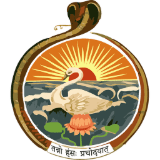
Here a harmonious combination of all the four Yogas, namely Karma Yoga, Bhakti Yoga, Raja Yoga and Jnana Yoga, is followed. This scheme contributes to all-round development of personality. In fact, if anyone follows with unflinching faith and regard the way of life (as described in the answer to the previous question) that is practised in this Order, he can harmonise these four yogas almost effortlessly in him. The harmony of four yogas is beautifully illustrated in the emblem of the Order designed by Swami Vivekananda. Our emblem is explained here.
You will find very useful guidelines on Brahmacharya (continence or celibacy) in the two books given below:
- Chapter on Strength of Brahmacharya in Youth! Arise Awake and Know Your Strength : By Swami Srikantananda. This chapter is available here for reading.
- Chapter on Brahmacharya in Spiritual Practice : By Swami Ashokananda. This chapter is available here for reading.
Yes, senior monks will guide you in every aspect of your monastic life if you approach them. They will also keep a watch on you to see if you are on the right path.
With few exceptions, branches—including those abroad—admit novices. Belur Math also admits and has a Pre‑Probationers’ Training Centre (PPTC).
But as it has been mentioned earlier, wherever you join, you will get an opportunity to spend two years at TC in Belur Math.
Belur Math is the heart of the Ramakrishna Order where the central monastery is located, and where Swami Vivekananda and a few of Sri Ramakrishna’s monastic disciples lived. It is also our Headquarters. Because of its sacred associations, many wish to begin their monastic life here. After keeping the new entrants in PPTC for six to twelve months, they are posted to different branch centres.
Not every Ashrama bearing the names “Sri Ramakrishna” or “Swami Vivekananda” is a branch of our Order. Please verify the official branch list at belurmath.org Branch Centres.
The wish to spend the whole life in a particular branch centre is contrary to the monastic spirit. You may join the Order at the centre of your choice and continue there for about three years at the most. After that, you should be ready to get posted to any branch of the Order as per the discretion of the senior monks at Belur Math.
Possibly. Headquarters decides such postings after considering many factors. Join with a spirit of surrender, free from strong likes and dislikes.
- The Glory of Monastic Life — Swami Bhajanananda (https://shop.advaitaashrama.org/product/the-glory-of-monastic-life/Advaita Ashrama Shop)
- Monasticism — Ideals and Traditions — A Vedanta Kesari Presentation (https://istore.chennaimath.org/product/monasticism-ideals-and-traditions/Chennai Math Store)
Yes, you can quit the Order at any point in your monastic life. People enter this life of their own accord and can also step out of their own accord. No legal or financial obligation on either side if one leaves! Quitting the Order need not mean the end of your spiritual pursuits. You will continue them wherever you are.
This is a matter which you alone have to decide. Observe carefully your own mind to understand where your real interest lies. Pray to God sincerely to make your mind strong and steady. You may also consult wise people and seek their advice in the matter, but the final decision should come from within YOU.
